Beyond the Bob Willard Collection, Volume 2
March 2022 First Edition
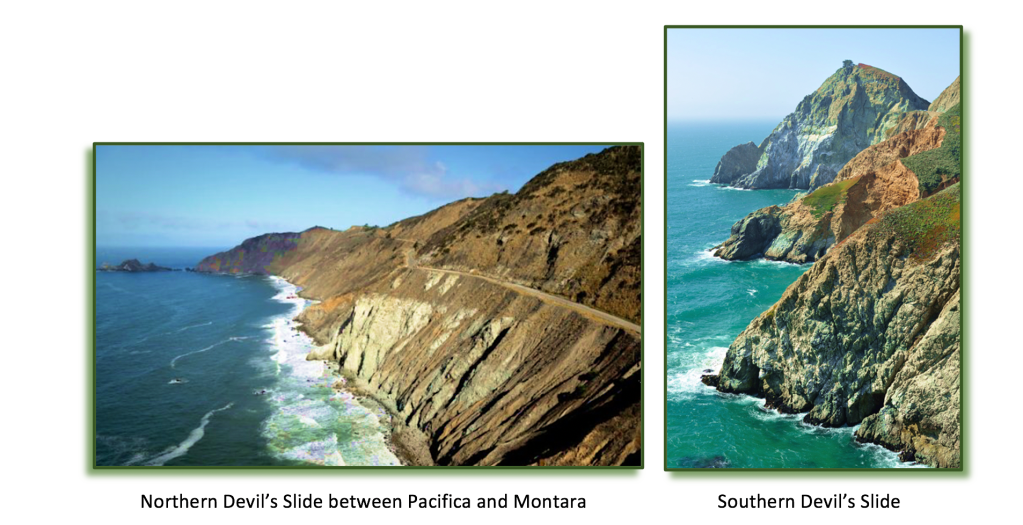
I met Paula for the first time at an indoor/outdoor almost-swanky party in Northern California. Location: the coast-side town of Montara, which overlooks the deep blue, misty Pacific Ocean. Montara is just sixteen miles south of San Francisco, and just beyond the dangerously high, twisting, cliff-clinging, narrow, two-lane portion of Highway 1, appropriately named, Devil’s Slide. Devil’s Slide earned its pejorative reputation due to multiple deadly rain storm mudslides driven by a natural peristalsis, over the steep cliffs, snatching thousand pound boulders, and an occasional, untimely, passing car, crashing all down to the ocean, 430 feet below. Highway 1 becomes impassable for months. Coast-side rescue teams know all the spots.
However, more cars fly over the cliffs, accidentally, than get swept away from mudslides. One father, and then 20 years later, his son, each plunged their cars off Devil’s Slide, at the same exit point, landing, pancaked, upside-down, on the rocks far, far below. Both died. Although rarely, on occasion, a death-defying victim miraculously crawls out of their metal pancake, leaving it destroyed on the rocks at the bottom, and attempts to scale back up the cliff, even with fractured bones, and a salt-water wallet.
The almost-swanky party was late in the summer of 1979. My introduction to Paula was unfortunately short, initiated by a friend, who was also a co-worker. Paula eagerly extended her hand for a sturdy, welcoming, enthusiastic handshake. That was it. That’s all it took. Paula made an impression on me. An immediate, lasting impression.
Turns out, Paula made an immediate impression on everyone at the party. I was just one of everyone. She was a super-high-energy girl, projecting a self-confidence that none of the rest of us shared. Within minutes, her name came up in conversations, in individual party group pockets, to which she was not even present. Everyone knew. Everyone could tell. It was obvious. Paula wasn’t hiding anything.
Her hair was shiny-black, trend-setting, and short-cropped. The more common girl’s hairstyle of the day was shoulder length, or longer, with curls. Her smile was infectious. She had a lot of teeth. Good, strong, well-shaped teeth. Her lips shined red gloss. Her eyes were emerald. Paula had green eyes.
I surreptitiously watched Paula while she was at the party, maneuvering to keep her in sight. Amidst buzzing conversations. In line on the outdoor porch to the makeshift bar. Between the clinking of glasses, and the over-reach for finger-food. Through the fog of exhaled cigarette smoke. Across the large, open living room. And in front of the fireplace.
I was not at all rude to my own date at the time… a woman older than me by fifteen-plus years. Her name, if I recall correctly, was Charlotte. Charlotte was my date, and I went to the party pleased to be with her. But then there stood Paula. She was distracting. Charlotte was my date… Paula consumed me.
It was my understanding that Paula had flown into San Francisco International airport, that afternoon, from Chicago, where she worked, and was already an accomplished Head Copywriter for the flagship U.S. advertising agency of the day: J Walter Thompson (JWT). I’d never heard of it. I overheard her to say that she was ‘writing copy’ for one of the airlines. At the time, I didn’t know that ‘writing copy’ were two words that could co-exist meaningfully beside one another. It was explained that she was an advertising copywriter. A world that I wanted to know more about.
But Paula did not remain at the party for long before she was whisked away. She stayed overnight, in San Francisco, at the house of the same friend/co-worker that introduced us. His name was Robert, and his girlfriend’s name, at the time, was Jan. His name remains Robert to this day, and his wife became that same Jan. Paula was on her way to Hawaii the following morning to meet someone. A guy named Ron. A boyfriend with an average name. A lackluster name. I wondered how Paula could like this Ron. Those thoughts occupied my brain.
Nevertheless, after Paula left the party with Jan and Robert, Charlotte and I mingled, and joked, and engaged, and shared stories with other party goers. I felt more relaxed. We held hands, and I was duly attentive to her, asking her if she’d like a drink of this or that. I asked if she wanted something to eat. I pointing out guests that I knew. And told her their stories, when I knew them. After a time, she and I extended our thank you’s to the host, said goodbye to friends from work, and left the party. I don’t believe that Charlotte realized that there was any interest by me, for Paula. I’m not a demonstrable person, generally speaking. So how would she know? How would Paula know? My inner feelings and desires are carefully hidden from the outside world. My heart squeaks and yearns hidden deep inside its ribbed nest; not on my sleeves, left nor right, where I am apt to wipe my nose, in plain sight, for all to see.
At the time, I was living in Mountain View, a San Francisco Bay peninsular city partially bordered by two high-brow upper class, wealthy cities: Palo Alto and Los Altos. Charlotte, in fact, lived in a 2700 square foot house which she owned in Los Altos. Well done, Charlotte! Nice going! Hurrah for you! Strike up the band!
As for me, my 720 square foot two-bedroom rental, in Mountain View, on the other hand, was off of Sierra Vista Avenue, down an alleyway, first unit of the third duplex on the right. I never allowed Charlotte to know where I lived, to allow her to even see it. Frankly, I was ashamed of my living situation.
Directly across the alleyway from my rental, in a unit identical to mine, albeit flipped 180˚, lived an eccentric, older man, that continued to go by his birth name: Eldie Holland. I figured it was a given name, not one of choice. He had dark age marks blotching his face, on his cheeks, which were fanned with wrinkles, and slight depressions. His mandible was sketchy. Mandible is usually reserved for insects, but Eldie looked like an insect. A preying mantis. At least in head shape. Without the antennae. I think. He constantly wore a fisherman’s hat, even indoors.
Whereas I had a housemate, a co-renter, a friend named Bob, who occupied the second bedroom, Eldie lived by himself with his rather large chocolate brown Doberman pinscher, which he named, Ginger. He also lived with his prize possession: a 1967 250 SL Class Mercedes Benz convertible. Eldie was a southerner. Georgia south. Not Alabama or Mississippi south. I mean, he had teeth. Hidden behind curled lips. I mean I THINK he had teeth. He did have a twangy, growly thing going on with his voice, and he was not a big man. He was a small man. A short man, I should say. Not overweight. Thin. I viewed him as an eccentric for three reasons. Eldie…
• …washed the bumpers of his Benz convertible in his bathtub
• …eagerly rubbed salve cream on the ‘hoo-hoo’ of Ginger, his Doberman
• …argued with the law over speeding tickets by bringing radar guns into court
Eldie argued before the judge, and policemen, in the courtroom, and gave demonstrations as to how a radar gun can be fooled. How it can be fallible, can give unreliable readings, if not professionally calibrated. Constantly. He demanded police records of calibration dates, and methods used, and the results. He turned his court hearing into a science lesson with math equations and diagrams, and his secret weapon was an old prism he carried with him to divide light from a laser. No one had any clue what the hell Eldie was doing, nor what the hell Eldie was even talking about. Including Eldie, would be my guess. I know he thought he knew what he was talking about, but he was mostly full of a gassy ballast. Digestive problems. But his courtroom shenanigans worked, and he’d get off scot free, cuz no one wanted to engage him. You got the sense they didn’t want to ask him any questions.
Eldie didn’t drive his Benz recklessly; just sometimes, too fast. And he didn’t care about being pulled over, and getting tickets, because he had his courtroom radar gun misreading routine polished to a tee, like the bumpers of his Benz, fresh from the tub.
Both Bob, my housemate, and I were young. Starting out. Making our way. Paying our taxes. Eldie was way beyond us in years, and was living in a dump… the 180˚ flip version of the dump we were living in. He was living on Social Security, with no backup. He asked Bob one day if he’d like to buy the unpleasing, plastic-framed, curled-up sepia picture that he had nailed to his wall. It wasn’t worth 2 bits. That’s <25¢. Bob was a big jovial piano player, a keyboard hobbyist, that had a day job, at Zytron, that met his bills, but he wasn’t interested in spending any capital on Eldie’s crappy picture that was nailed to Eldie’s wall. Eldie never asked me to buy his living room wall adornment. Thank goodness. I don’t like disappointing people. I may have bought it, only to throw it away within a fortnight, only to then have Eldie ask me later if he could buy it back, and I’d have to admit to tossing the thing in the garbage, because it was junk, and that would have made Eldie feel bad. And he might remove his fisherman’s hat momentarily, and I’d see the antennae on his head, if he had any, and the lady next door with the baby might see the antennae if she happened to be glancing out of her scratchy Plexiglas living room window at that inopportune moment.
So, I was glad Eldie didn’t ask me to buy his poorly framed living room art. But I learned something firsthand from Eldie: Police radar traps can be unreliable, and can be fought in court. But more importantly, I learned, from observing Eldie, to not rely on Social Security as the only income source when I get old, and my hair finds another head to live on. The ‘hoo-hoo’ dog-salve remains a cream mystery. And I don’t recommend that you, Dear Reader, waste time thinking about it. When Eldie and Ginger were ‘In Session’, Ginger’s hind legs would jerk about wildly, uncontrollably. Sometimes banging with staccato punctuation against the thin exterior walls, and reverberating into the narrow alleyway for all of us to hear. It was like having a great beat to tap our toes to.
Both Bob and I worked at Zytron. I had recommended him to the powers in control of hiring. I relayed to Bob that I had paved the way for him to call the HR folks. He called them for a few minutes, set it all up, and then he asked me if I thought he should spray on some sweet smeller before he goes to the interview. I answered that I didn’t think that was necessary. Bob heeded my advise, stepped up like a champion, and did the work needed to land the job. Which consisted of showering a little longer than normal, and showing up for the interview somewhat on time. I was real proud of him. Talk about a low confidence guy! I don’t think he was a Mormon kid, but he was from Salt Lake. That’s how the locals say it. They say, ‘I’m from Salt Lake.’ Usually it still comes out sounding like an apology, which is understandable.
I knew a girl from Salt Lake once. I met her in Denver. Later, I drove nine hours from Denver to Salt Lake to see her but she had a new boyfriend when I got there, so that was a bummer. She had blond hair cut straight across in the back, almost shoulder length. She also had a pig nose, a little pushed up, but I liked both her hair and especially her pig nose. I only saw it a couple times before driving the eighteen hour round tripper to Salt Lake and back. I had only been with her two times before gassing up and making the trek. Although, in neither of the two times was I actually ‘with her‘.
The first time I met her I wasn’t really with her. She was one of the girls that some of the guys I was with talked to at a dance. I mean we didn’t dance together or anything; she and I. We barely even spoke. The music was too loud to hear what she said. And then she and the girls she was with left about a half hour later.
The second time I was with her was the next night. I guess one of the other guys and one of the other party girls arranged it the night before at the dance. It was that second time that I was with her is when she said that she lived in Salt Lake. And I should come out. She said Salt Lake was real cool. So she kinda invited me, so I did go out, and that’s when I got out there and she had a new boyfriend. I drove out to Salt Lake on US 40 highway, through Dinosaur, CO. But I took a different route back to Denver by driving south on I-15 from Salt Lake to the intersection with I-70 and headed east through Grand Junction and Glenwood Springs. I didn’t stop to swim or anything.
Bob nailed the Zytron interview like a capable carpenter showing off rapid fire ball peen hammer pounding. Took control. For him. Another co-worker at the time was a guy named Eno. I don’t know how it was that he landed the job… how it was that Eno got his job. I also don’t know how Eno got his unusual name. The first time I heard it I was glad my name wasn’t Eno. It’s the very first thought I thunked. I didn’t catch a word of what he said the first minute after I met him. I just thought I was glad my name wasn’t Eno. I think Eno has gone through life with everyone he meets, secretly and immediately, thinking they were glad that they weren’t named Eno. I never asked him if he was thinking of changing his name. Maybe Eno ‘knew’ someone at Zytron regarding the job, and anyway, he was a good worker. If you met him you’d never guess that was his name was Eno. Weird name for Sunnyvale. Eno was of Italian descent – possibly from Sicily. We all created microfiche from data stored on computer tapes. Eno and I worked together as co-day-shift managers, and as such, often went to lunch together to talk ‘biz’.
Before breaking for lunch, Eno, and I would punch our time cards at 12:00 noon sharp, exit the building (in Sunnyvale, California), and walk two blocks west, to the same restaurant we ate lunch at every day, and ordered the same food every day. There was outdoor picnic table bench seating, and it was almost always warm outside, so we’d first place our order indoors, pay individually with wadded up dollar bills from our pockets (pre-wallet days) and then we’d go sit at the same picnic table outdoors that we’d eat at every day, until our order numbers were called. Sometimes they’d call out our names rather than our order numbers since we had become ‘regulars’, and everyone that worked there knew our names.
I almost always ordered the steak sandwich, fries, and a coke. Eno did the same; steak sandwich, fries, and a coke, too. Each time that I ordered something other than the steak sandwich, I wished I’d ordered the steak sandwich. So it became routine; an automatic order. It got to where it was expected of me to order a steak sandwich, fries, and a coke. Same with Eno.
Sometimes my steak sandwich was larger than Eno’s steak sandwich. I liked that. I’m shallow, I know. This selfish reaction is a dead giveaway. I get it. But with honestly and frankness, on the days that my steak sandwich had a larger steak lurking between the halves of the sesame bun than the size of the steak hiding inside the bun of Eno’s steak sandwich, I felt good about it. I mean, I didn’t gloat. I didn’t do a cartwheel, which I could have done. I’m theorizing, as I hadn’t done a cartwheel in years. I didn’t jump onto the picnic table, do a dance, and blow the shofar. I just played it low key. I’d just lean over toward Eno and say, ‘Hey Eno, do you need help finding your little steak in there?’
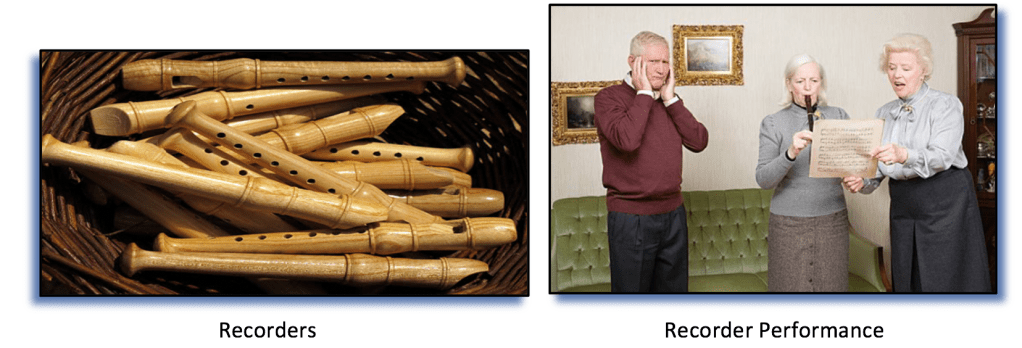
Below, please find the picture of a shofar. To make it easier, it is the picture labelled: Shofar. Upper left. I didn’t carry one of those with me when Eno and I went to lunch from the Sunnyvale Branch of Operations of Zytron. I didn’t have a shofar case to carry it. I didn’t even own a shofar, and still never have owned a shofar. Never rented one, neither. I wouldn’t even know where to start if I wanted to rent a shofar. That’s how removed shofars have been during my entire journey. I believe that you, and I, Dear Reader, have exactly the same amount of experience blowing a shofar. Plus, as far as I’d ever heard, actually one of the most consistent things that I’d ever heard about really, anything, was that shofars are really hard to play. I never saw sheet music for a shofar. A woodwind instrument, like a recorder, makes much more sense. Don’t confuse ‘woodwind’ with ‘reed’. Recorders are woodwind instruments… but they are not reed instruments. Shofar’s are neither: shofars are ram horns. Like antlers, but they call them horns. Moose antler shofars are rare, and a poor substitute for a ram horn shofar, because they require lungs like leather footballs… and only play E-flat. Below is the aforementioned shofar pic, with a bonus recorder pic for ease-of-play comparison. You judge.

Back at lunch with Eno, I also had a warm feeling when my bag of fries had more fries in it than Eno’s bag of fries. It wasn’t nearly as warm of a feeling as when the steak in my steak sandwich was larger than the steak in Eno’s steak sandwich. Lesson? More and bigger is always better than less and puny. That’s the takeaway. Is that God’s plan? Couldn’t say. I’m non-biblical and have no shofar skills. I never even wanted to know how to blow a shofar. It isn’t on my ‘list’.
Occasionally, Eno’s steak was slightly bigger than mine, which was an irritant. May the fleas of 1000 camels fly into your tooth paste. You know? That sort of irritant. Either way, the steaks were always thin rib eyes that cooked up fast on the enormous indoor, open flame, charcoal grill. They never disappointed. They were fantastic. Made eating lunch with Eno a lot of fun.
Eno and I got to talking about sports, and sports betting, more often at lunch, cuz the microfilming was going pretty good back at the office, and there wasn’t really nothing to talk about it. Eno had a ‘connection’ to a bookie in Reno, Nevada, and so Eno and I started to place bets. On baseball. It was baseball season. Summer time. Not December. It was June and July. We bet 50 bucks to start, and quickly began placing multiple bets daily. I don’t really remember how much we bet, quite frankly. But it was a lot more than nothing, quite frankly. And as long as frankness is important here, let me just interject and admit that we were getting our asses kicked. Okay? Smudge marks stained the rear pockets of our trousers. You understand that? Here, keep reading:
• We’d pick the Oakland A’s to beat the Anaheim Angels… and the Angels would win
• We’d pick the Anaheim Angels to beat the Oakland A’s… and the A’s would win
This continued like it was a pattern. We got up to a debt of around 2000 bucks. Maybe more. I didn’t know. I didn’t count. I wasn’t tracking it. I didn’t even own a wallet. But that’s a lot of bucks for microfilm day-shift managers. Bottomline: we had no system. We were betting baseball games like rookies. Even worse, like losers. At a time when we were the Kings of All Microfilm Managers Worldwide, we were also losers betting baseball. How can that be? Life can really be a puzzle. It’s like you could be the class valedictorian, and be an asshole, both at the same time.
I didn’t know how bookies worked. As far as I knew, Eno wasn’t paying the guy anything. I know I wasn’t paying him cuz I didn’t know who he was. I didn’t even know his name. I thought it was supposed to all be a secret, so I didn’t bother to ask any questions. And besides, Eno wasn’t asking me for any money. I just figured the bookie would take a portion of our winnings… and I didn’t know exactly how much he would take, but maybe, 10%? I didn’t know. No frickin idea. (I should not have used the word ‘frickin’ there. It’s not a word I’ve ever used verbally. Never. Not even once. Not even now. I just don’t use that word. And I’m not gonna. It’s not me. I’ve got to stay true to me. And I’m not a fan of the word in print, either. I may not even keep it. But if, before publishing, I go back and change ‘frickin’ to a different word, a better word, a less-lazy word, less of a bullshit word that isn’t even a real word; if I return to give it the kind of attention, and care that you deserve, Dear Reader, to show you my heart-felt appreciation, to further cement our mutual bond, then please just ignore this parenthesis.)
Anyway, Eno and I weren’t winning our baseball bets, so the bookie wasn’t making anything. Just like us. We were all in this together. Like a partnership. Not a legal partnership cuz it was all secret, under the table. Nothing was signed. No notarization. All was good. No harm, no foul. Then, at lunch one noon, plus the five minute walk to the restaurant, plus another five minutes waiting in line and ordering, and plus another five minutes waiting for our names to be called (Note: each five minute interval catalogued is, at this point, just an approximation), while seated at our usual picnic table, with our rib eye steak sandwiches, and fries, and coke, Eno dropped the bomb:
Eno: The bookie told me we need to pay up.
Me: What? (The steak sandwich was delicious, as always. The right amount of fat, and not too much gristle. I never liked a lot of gristle. I think that’s true of most people. No one ever asked if I was gonna eat all my gristle.)
Eno: The bookie told me we need to pay him.
Me: Ya. That’s what you said. What does that mean? When did he say that?
I waited, politely, while Eno dabbed his chocolate brown lips with his canary yellow napkin.
Eno: He said he has to pay up, so we need to pay him.
Me: Really? How much do we owe?
Eno: We’re down $3700. We need to pay him $3700.
Me: What?
Eno: Or he breaks our legs. (Unsure if Eno really said that. I think he did.)
Eno got up from the picnic table, and went over to the outdoor mayo station/napkin dispenser. The plastic knives and forks were there, too. As well as ketchup for the fries, from one of those long-armed push-down condiment dispensers, into those little paper ketchup cups. You could put ketchup on your steak sandwich, too. Not just your fries. They didn’t care. You could probably flood your pockets with ketchup, if you didn’t mind walking around with ketchup oozing out, and sliding down your legs. The restaurant seemed very relaxed about the ketchup usage. Unconcerned. They probably bought the ketchup by the gallons, and probably bought the little paper ketchup cups in bulk. They were running a successful business. They had it figured out.
So, I invented a system of betting while Eno went to grab more of the canary yellow napkins, and he brought me another canary yellow napkin, too.
Other than looking Indian and in reality being of Italian descent, possibly Sicily, due to his almond, or some say chestnut, skin color, and his chocolate brown lips, Eno was noticeable because he always wore crisply ironed slacks. No one else did. Dear Readers: I understand it is currently taboo, out of practice, and unacceptable to write about Italian skin color, or the people from Italy, in this way, but I’m writing this as though I were writing it twenty years ago, when it was okay to write about their skin color, in this manner. Believe me. I am no racist. Capische? [‘Capische’ is a wop word for ‘understand?’, even though many of you THINK you know it as a cold seafood soup dish.] So while Eno always wore crisply ironed slacks, usually taupe, I wore blue jeans. Bob also wore blue jeans. Gary Tamales, another microfilming sharpshooter, also wore blue jeans. All the swing-shift, and graveyard-shift, microfilm delivery personnel wore blue jeans. We seemed to all wear white socks, and tennis shoes, too. Eno wore dark socks, and brown leather shined shoes. You getting the picture? Eno wore button shirts. I didn’t own a button shirt. Neither did Gary Tamales, although I know that Bob, my housemate, owned a button down shirt, cuz I saw it at our place on Sierra Vista Lane. Down the alleyway, and across from Eldie, and Ginger’s, place. I saw Bob’s button down shirt in his closet, once, but he didn’t wear it to work at Zytron. He wore it to the Zytron interview, and it may have helped him nail the gig. Probably did. I didn’t get my job at Zytron through that method. I had previous experience doing microfilm work. More than a whole year of it. I was already an expert. I already knew how to run the Datagraphix 4440, and the 4560, and mix the chemical baths to process the film, and make the copies, and do the paperwork, and keep it all humming at the same time. It was like juggling. So I got hired over the phone while I was wearing a tee shirt. I had never even met the guy that hired me beforehand: Mike Varela. Maybe Eno just didn’t understand that he didn’t have to keep wearing gig-getter button down collared shirts, cuz he already had the gig. Maybe it was cultural. Maybe Eno knew more than I knew about it.
Upon Eno’s return from securing the canary yellow napkins, I told him:
Me: Okay. This is what we’re gonna do.
Eno: Wait! I need to get more napkins.
So, Eno leaves the picnic table again, and grabs a bigger handful of canary yellow napkins, and after he carefully laid out several napkins on the picnic bench, where he was sitting, he carefully plops down again, and I continued:
Plan 1: When any team wins three games in a row, we say they are on a Winning Streak. We bet them to win… until they lose. Got it? We bet every team on a winning streak until they lose.
Plan 2: Additionally, if a team loses three games in a row, we say they’re on a Losing Streak, and we bet against them… until they win.
Well, it was pure genius. Worked like a charm. You know, that is, if charms actually worked. It was a two-pronged attack, and easy to track. It was a system easy to implement, and it was a system that took all the thought out of the equation. Equations get confused when thoughts and emotion come into play.
Correction: Gary Tamales did wear a button-down bleeding Madras shirt one time, at Zytron. He confessed, morosely, that the rest of his clothes were dirty, and he hadn’t had time to take them to the laundromat. He looked absolutely lost in the button-down Madras get-up, and was obviously embarrassed by his appearance. I felt a tinge of embarrassment for him, as well. Had I have been in the same situation, I would have just worn one of my dirty tee shirts. People don’t all make the same decisions. That’s a thing. Right there. People don’t all make the same decisions. But I didn’t find myself in that situation. Some people might say that that’s what makes the cookie crumble, but I wouldn’t say it like that. I’m not big on interpreting analogies, or transposing metaphors, or unraveling fancy erudite comparisons.
I’m not big on it because I’m no good at it. What kind of cookie, for example? I like cookies. Who doesn’t like a cookie? You’ve had one. Or two. Hundred. Preferably with milk. Some people have flatulent issues with milk. They shift to soy. Some people are milk dunkers, some aren’t. Some are even coffee dunkers, some aren’t. There are lots of variations. Case in point, you might say:
• Absence makes the heart grow fonder.
While someone else says:
• Out of sight, out of mind.
This shit is complex, is all I’m saying. Sometimes, you gots to just move on. Make a decision. Realize and come to grips with your own inadequacies, and interpretations.
And what the hell is a ‘sharp cookie’? Have you heard that? Shake your head if you have. Up and down, not side to side. Sometimes I’d hear my father say that someone was a ‘sharp cookie’. Makes no sense. Or, someone might say ‘sticks out like a sore thumb’. Anyone ever have a sore thumb that stuck out? I never seen it. Maybe in a cartoon. Maybe never. I just don’t recall. Quite frankly. In addition to ‘sharp cookie’, my dad would sometimes say, ‘That guy is a smart feller.’ And even as a kid, I got the joke.
It didn’t take long for Eno and I to reduce our baseball betting debt back to zero. The Philadelphia Phillies helped us out a lot by going on streaks. Same with the San Francisco Giants. And the Baltimore Orioles. Once we reached zero debt, we stopped. Quit betting. I knew that we were on to something, but we didn’t have any real data to support the system I designed. The day after we reached zero, we finished eating around 12:50p, which afforded us enough walking-return time to re-punch our cards by 1:00p. As day-shift managers, we were allowed a full hour for lunch time. Lowly microfilm operators, and others below our pay scale, were required to punch back in within 45 minutes.
I was fired, and re-hired, from Zytron twice the following year. Each time it was because I took a stance against an issue that would either:
• change a procedure that had been in place that everyone was happy about; or
• re-implement an old procedure that we gotten rid of earlier
Both times I was re-hired because the Zytron bosses sitting on my throat knew I was right, and the day-shift operations ran more smoothly when I was in the lab, under the roof, performing like a maestro. And that was critical. And I knew it.
One of the stances I took was insisting that the microfilm operators, and others below my not-lofty pay scale and impressive managerial position, should be given a full hour for lunch, before having to punch back in, rather than the absurdly inappropriate, and skimpy, 45 minutes they were allowed to have. You couldn’t guarantee that you could even walk up the block, get a burger, and get back, within 45 minutes. No one could guarantee that. No one in the Zytron super-hierarchy could make that argument. What if there was a long line when you arrived to place your order? What if someone placing their order was having trouble making up their mind? What if the tape in the cash register ran out, and the order taker had trouble putting in new tape? No one likes to be around when the cash register tape runs out. Doesn’t matter where, when, how, or why. If the tape runs out of the cash register, it’s a fight or flight moment. It’s certainly the closest thing to a fight or flight moment that you ever run into that really shouldn’t be a fight or flight moment. Go on. You see if you can name another one. I haven’t even thought about it, and I can’t. When the tape in the cash register runs out, it tricks your brain into firing signals across lobes that are better off unfired.
That’s not the only situations that could occur to make returning to work, and punching back in within 45 minutes, difficult, or impossible. Okay. You want another example? Another scenario to support my position that 45 minutes is not always enough time for lunch, for the common employee staff? What are they supposed to do, how do they get back to work in the skimpy 45 minute window, if someone choked on one of the charcoal hotdogs… and died, and there was police tape surrounding the joint, and lights were flashing, and the sirens had quieted, but everyone was told by the police to stay seated, so the police could take their statements, as an on-site witness? Not a good example, I know. It could make returning within 60 minutes unlikely. But there could be a large, unexpected, lunch party, that made everything slower. Your burger could fall on the ground, and you’d need more time to get a new one ordered, and re-cooked. The grill could go on the fritz, and you’d have to go to an entirely different place to get lunch. There are many reasons why getting back to the office in 45 minutes could be a problem.
Every lunch minute made a difference to the ‘staff’. They weren’t managers, like me, or even some of you, perhaps. Most likely a limited number of you, but… The company thought about my proposal, and agreed with my proposition within a week after escorting me out of the building for promoting it to the ‘staff’, before I had secured upper management sign-off. Then, the bigwigs crawled on their knees to get me to return. Begging. Which I agreed to do, only after nailing them for a 35¢/hr raise. That’s about $50/month. Pre-tax. ‘He has a review due soon, anyway,’ they reasoned to themselves, as I left the brightly lit office room that was the location of my victory. But it was a great week off. Invigorating. I went to two Jerry Garcia Band concerts: one at Keystone Berkeley, the other at Keystone Palo Alto.
The other notable stance I took against upper management had to do with graveyard shift hours, and pay. Zytron was a great place to work, challenging, demanding, with great camaraderie. And one of the coolest things they did was pay graveyard shift workers 40 hours pay for 36 hours work + a 10% bonus, each week. Before my well-deserved promotion to day-shift co-manager, I worked the graveyard shift. My work week would begin at 8:00p Sunday night to 8:00a Monday morning. Then 8:00p Monday night to 8:00a Tuesday morning. And finally, starting at 8:00p Tuesday night and ending 8:00a Wednesday morning. Three 12 hour shifts, beginning Sunday night and ending Wednesday morning. My weekends began Wednesday morning when I finished my last shift at 8:00a. I had all day and night on Wednesday off, all day and night on Thursday off, all day and night on Friday off, all day and night on Saturday off and pretty much all day Sunday off, since my new work week didn’t start until 8:00p Sunday night. And I got paid 40 hours-worth of US currency + 10% more for working graveyard.
When upper management bigwigs began discussing a different, less enticing, implementation of graveyard shift hours, I calmly suggested ‘No’. The upper management bigwigs felt threatened. They felt that I was not supporting the company. They weren’t wrong in that, really, and following a heated exchange, they let me go. Again. Fired me! And called me back a couple hours later, asking me to return, explaining/whining that they had over-reacted, and promised that there would be no change to graveyard shift hours, and pay. I agreed to stay under their employ. No additional compensation was discussed at this time.
Then there was a third, and final, time that I got fired. It was a principle thing. I was right. They overreacted. One of our customers, for whom we provided daily, big-batch transactions on microfilm, was Fairchild Semiconductor. The turnaround times were ridiculously short. Our drivers would pick up computer tapes with daily transactional data for us to microfilm, and the contracted delivery time back to Fairchild Semiconductor was so tight that under the most optimal conditions, it would be close. And if we were late, there would be financial penalties.
Zytron salespeople could care less about the troubles they thrust upon us operations personnel. We were the individuals that had to meet their contracts. We were the individuals that actually did the real work. Day in, day out. Monday thru Sunday. Each week. Including month-end, when volumes doubled, and quarterly, when volumes tripled, and year-end, when volumes were ten-fold. We’d have stacks of Computer Output Microfilm (COM) canisters up the ceiling during year-end.
But my third firing had to do with our day-shift driver, Ralph. He was a great employee, a kind soul, and raced in the company’s Datsun pickup truck over to the Fairchild Semiconductor office building in San Francisco to deliver that particular day’s stack of microfilm. It was enough to fill a small box. Only one day earlier, having been contractually late by five minutes, because the earlier driver hadn’t put gas in the Datsun pickup, the bossy contact lady at Fairchild called the salesman at Zytron, her contact person, to complain about the tardiness of the service. Five minutes! That rage came down on Ralph, undeservedly, in my opinion. Ralph, jokingly and playfully, in order to give a microfilm delivery driver’s ‘fuck you’ back to the Fairchild queen, hid a prophylactic in that day’s microfilm package delivery. It was childish. Assuredly stupid. He told me about it. And showed it to me. It wasn’t serious. He was just joking around. He wasn’t doing nothing. He was going to pull it out.
The prophylactic was never intended to be delivered. Poor Ralph forgot to remove it from the delivery. Well, the Queen of Fairchild was on the phone screaming at the salesperson at Zytron, again. Ralph hadn’t even had time to return to the office, yet. After stomping down the stairs, you could hear it coming, I was directed to fire Ralph. I defended Ralph, and said it was just a dumb mistake. Not intentional. They said to fire him. So I said that I did it, that it was me who had put the prophylactic in the package of microfilm; so as to protect Ralph. You know, a manager sticking up for a flock member. So they fired me. The company was really being run by an outsider; the Fairchild Queen. They actually fired me. So, I said fine. And when things cooled down, and they called me the next day to beg my return, for a third time in around a year, I said ‘No thanks. I think I’ve done all that I can do there.’ I never returned. But it was still a great place to work. Most alums feel the same way. I remain, and will always be, a huge fan of Zytron. Happy to have it in my portfolio. Super glad they fired me… finally.
To reduce my rent, and to escape Eldie, and his Ginger Doberman, and to put Sierra Vista Avenue, the dumpy street where we lived, in the rearview mirror, I began looking for a new place to live. I wasn’t working. I had time. I had a little cash in my purse. The poetic use of ‘purse’, not an actual girly one. I didn’t even have a wallet. How could I have a purse? I saw a listing on a bulletin board at Kepler’s, a bookstore in Menlo Park, regarding a redwood cottage, in Woodside. $400 all in. Included rent, and all utilities. It was easy to calculate that this would be a reduction of about $50 a month from the duplex in Mountain View, across the alleyway from Eldie.
For the unknowing, Woodside is one of the most expensive cities in America. Hilly. Estates. More estates. Horse properties. Acreage. Million dollar homes in the late 70’s, and early 80’s. Woodside, along with its neighbor city, Atherton, was a rich person’s haven. Lawyers and Executives. The whole idea of my living there was totally absurd, but I drove up to the redwood cottage address, in Woodside, and would have wet my pants had I had issues like that, which I didn’t. I had been accident free from wetting my pants for years, as far as you know.
The address was 406 Maple Way. I had to drive through a tunnel of trees to get there, slowing down to look at a map, concerned I was lost. It was located on a country back road. The place wasn’t locked. The owner just said to go on in, look around, and get back to him. The cottage was 600 square feet. There was one bedroom, with the single bed elevated, up in the boughs of the tree limbs, which were just outside the surrounding old wooden windows. It had a kitchen, sort of. The smallest kitchen ever. I didn’t cook a lot. There was no insulation anywhere in the house. There was no heat (no wonder the $400 included utilities… there was only electricity, and water, at the time, was cheap). Outdoor foliage was growing through the cracks in the walls, invading the inside. The water from the shower poured directly onto the dirt ground beneath it, under the house. It was a pie-shaped lot, covered with scrub oak trees, and a little clearing, for a little garden. It was the coolest place I’d ever seen. There was an old red brick outdoor patio area that got plenty of sun, with an old failing white bench. Under the house were weathered, damp, cardboard boxes of dishes from bygone years, and copper kettles. And there was a screened-in porch to keep most bugs out. Not all. But most. Many.
The owner was an old man that lived in San Francisco. He had built the place as an escape from city life in the 1930s. His name ended with Kelly, first name was Pat. I contacted Mr. Pat Kelly straight away after my visit to 406 Maple Way, and told him I loved the place, would take good care of it, and to my surprise, he rented the place to me, over the phone, within minutes. It happened so fast. My heart raced. My head did the tilt-a-whirl, and an imaginary cartwheel. This was an extraordinary find, and I knew that I’d landed in paradise. For the first time.
The place was really isolated, and that took some adjustment, but I still had a number of friends, from Zytron, and from earlier housemates, and they all visited, and all approved of the place; wishing it was theirs. I lived like a recluse more so than at any other time, and then one day, on my black dial telephone, Robert, the friend from Zytron with the girlfriend, now wife, named Jan, who was at the party in Montara, a couple years earlier, asked while we were catching up:
Robert: Do you remember that girl named Paula, from Chicago, at the party, in Montara?
Me: Uh, yeah. I remember her. (I was trying to be coy. I knew exactly who Paula was.)
Robert: Well, she moved to San Francisco, and is coming over Thursday night.
Me: Really?
Robert: Do you want to come over after dinner?
Me: I think I can make it. What time?
Robert: 7:00
Me: I will be there. Thanks.
It was November, 1981. The actual date was Thursday, November 19, 1981, in case accuracy adds texture. I had been living in my redwood cottage, in Woodside, for months by then. Jan and Robert lived in their stucco house, which they owned, with a mortgage, on Kronquist Court, in San Francisco. I didn’t know where Paula lived. But it was somewhere in San Francisco, according to Robert. I lived about 40 minutes from Jan and Robert’s house, and rang their doorbell at 6:59p, on the evening of Thursday, November 19.
I could hear steps from within clanging down the stairs, and ‘Hold on a minute’ in Robert’s voice, calling out. Moments later, Robert opened his front door, and my life took a twist to the future.

 Cantations